
Industry · Electronics
Fine codes and logos for electronics manufacturing
Apply microtext, 2D codes, and compact logos on PCBs, cables, housings, and small assemblies with MARKTECH continuous inkjet and laser marking systems.
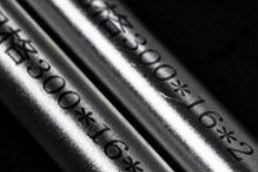
Electronics lines often need small, high-contrast marks on compact or irregular parts — without contacting the surface or slowing the conveyor. MARKTECH systems cover that range: the Cx400 40 µm CIJ platform for microtext and fine codes, UV and fiber lasers for permanent marks, and the H200 Series for high-resolution codes on cartons and labels.
Typical marks on electronic parts
- Serial numbers, lot codes, and compact logos on housings and modules
- 2D codes for internal traceability on boards, devices, and accessories
- Continuous identification on cables and extruded profiles — see cable and extrusion marking
- Date, lot, and barcode content on secondary cartons and films
Choosing a technology
Start with Cx400 when you need non-contact inkjet on small characters or mixed substrates. For marks that must last the life of the part, evaluate the 4005 compact UV or L3000 Series UV on plastics, and the L2000 Series fiber on metals and some treated non-metals. The final choice should follow a sample review of the actual substrate and code layout.
Integration notes
Cx-series printers provide sensor, encoder, alarm, and MODBUS-capable I/O for line control. Laser platforms can be specified with photodetector, encoder, and expansion I/O. If you are planning a cell or conveyor install, the integration checklist outlines the practical signals to confirm before installation.
Typical codes on electronic parts and packs
Housings and modules often need serial numbers, lot codes, and compact logos. Boards, devices, and accessories may carry a 2D code for internal traceability. Cables and extruded profiles need continuous identification along the length — see cable and extrusion marking. Secondary cartons and films still need date, lot, and barcode content, which is a different job from the permanent mark on the part itself. Logo work is also described under branding and logos.
Why these platforms are the usual starting points
Cx400 is the 40 µm CIJ option oriented toward microtext, fine 2D codes, and compact logos on small or mixed substrates, with a print distance of up to 30 mm. The 4005 compact UV marker (5 W, 355 nm, 70×70 mm field) and the L3000 Series UV are the usual laser starting points on plastics. L2000 Series fiber is the usual starting point on metals and some treated non-metals. The H200 Series covers high-resolution codes on cartons and labels when the job is secondary packaging rather than the part itself.
What to send for a quote
- A part, housing, or jacket sample, or close-up photos of the marking surface
- Required code size and content (text, logo, or 2D)
- Line speed or cycle time, and whether the part is moving or fixtured
- For cable work, the jacket compound, mark interval, and running speed range
Send the details through the inquiry form. Material response should be confirmed with a sample mark rather than assumed from a generic substrate name.
Request a quote
Have a part or cable sample?
Share the substrate, code size, and line speed. We can recommend a CIJ or laser configuration and review sample requirements.