
Application · Cable & extrusion marking
Continuous codes on cables, pipes, and profiles
Mark meter marks, lot codes, logos, and identifiers on moving cables, pipes, and extruded profiles with non-contact CIJ or UV laser systems.
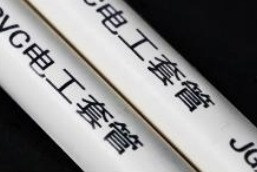
Cable and extrusion lines present a moving, often curved product that is difficult to mark by contact. Non-contact continuous inkjet and flying UV laser systems are the usual MARKTECH starting points for meter marks, lot codes, names, and logos along the length of a cable, pipe, or profile.
Recommended starting points
- Cx-series and RX680 CIJ printers are specified for non-contact coding on curved, uneven, or mixed surfaces, including cables. Official Cx-series line speed is up to 315 m/min for 1–5 lines, with a print distance of up to 30 mm from printhead to material.
- The L3000 Series UV is described for flying coding on pipes and similar PPR, PVC, and PE materials. The 4005 compact UV is a 5 W, 355 nm option for continuous coding with a published line-speed range of 0–300 m/min, depending on material and content.
- The H200 Series can also be used on certain pipes and profiles where a high-resolution cartridge mark is appropriate.
Line-speed and encoder considerations
Extrusion and cabling speeds vary, and character spacing must stay consistent as the line changes speed. An encoder signal is the usual way to keep mark pitch accurate — see the integration checklist. Ink or laser process selection should be confirmed on the actual jacket or pipe compound; pigment or dye CIJ options exist by model, and UV laser response differs across PVC, PE, and related materials.
Related sectors
Cable marking is common in electronics and building-materials work, while pipe coding often sits with packaging or construction products. Share jacket or pipe samples, the required mark interval, and the running speed range when you request a recommendation.
Specification checklist
- Jacket or pipe compound (for UV laser, official L3000 literature lists pipes and similar PPR, PVC, and PE materials)
- Approximate diameter or curvature, and a sample of the jacket or pipe
- Required mark interval (for example meter marks) and the running speed range
- Whether an encoder signal is already available — character spacing should stay consistent as the line changes speed; see the integration checklist
- Code content — lot, name, logo, or identifier — and, for CIJ, any print-distance constraint (Cx-series print distance is up to 30 mm). The 4005 published line-speed range is 0–300 m/min, depending on material and content.
Send the checklist and samples through the inquiry form. Cable work is also described in the electronics industry overview.
Request a quote
Marking cable or pipe on the line?
Tell us the jacket or pipe material, mark interval, and speed range. We can recommend a CIJ or UV laser configuration.