
Application · Permanent part marking
Laser marks that last the life of the part
Use MARKTECH fiber, UV, CO₂, and handheld laser systems for traceability, branding, and identification marks on metals, plastics, and components where ink is not preferred.
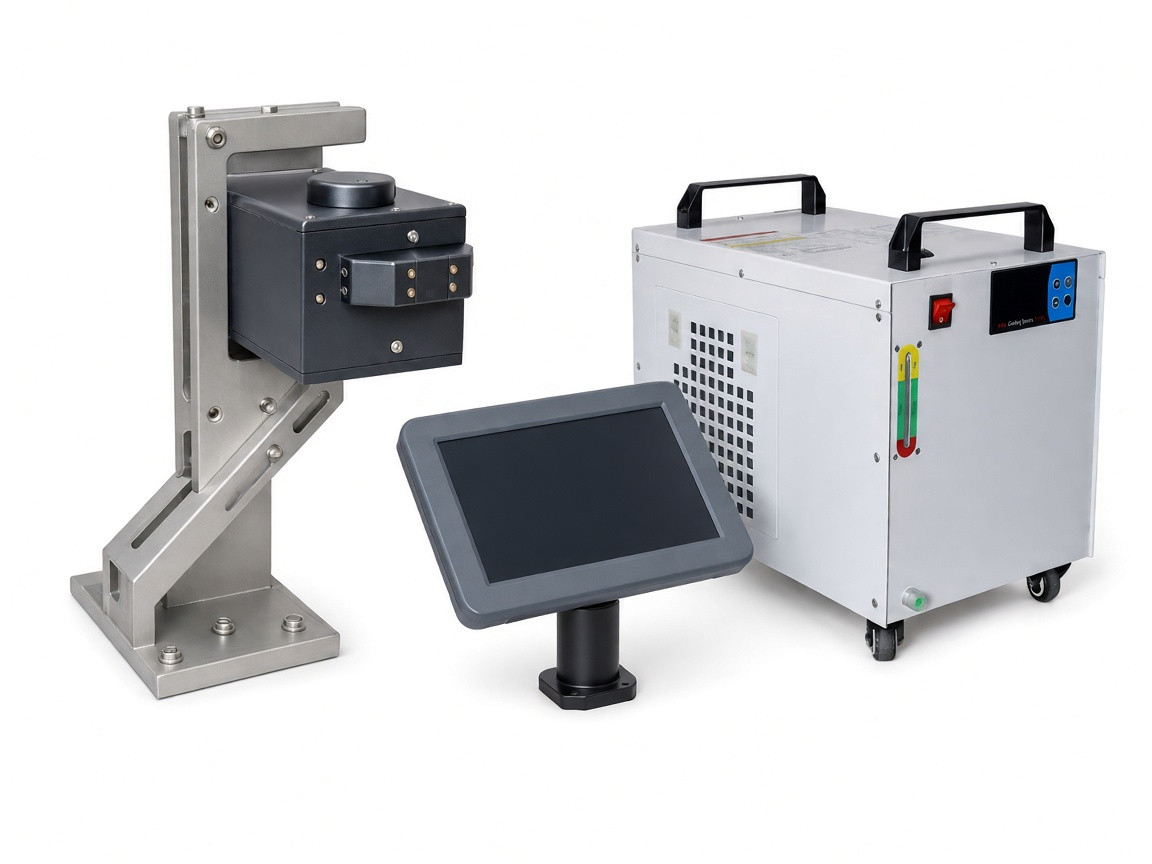
Permanent part marking is used when a code, logo, or identifier must remain readable for the product lifecycle — and when ink or ribbon consumables are not the preferred process. MARKTECH laser systems cover CO₂, fiber, and UV processes, plus a compact flagship UV marker and a handheld platform for oversized or fixed parts.
Matching process to material
- L2000 Series fiber — most metals and some treated non-metals, including PVC, HDPE, foil, rubber, and plastics.
- L3000 Series UV and the 4005 compact UV (5 W, 355 nm) — pipes, plastic films, bottle caps, and similar PPR, PVC, and PE materials, as well as compact continuous coding jobs. The 4005 has a 70×70 mm field and IP54 protection on the print head only.
- L1000 Series CO₂ — paper, film, plastics, wood, and other non-metals on medium- or high-speed packaging lines.
- Handheld laser — portable marking for oversized parts, rework stations, and hard-to-reach surfaces.
Material lists above follow official series literature. They are a starting point, not a guarantee on every grade or coating. Always validate with a sample mark. The laser marking notes collect this guidance in one place.
Typical content
Dates, batch and shift codes, names, logos, and 2D identifiers are common. Automotive, electronics, and device components often need marks that survive handling and assembly — see the automotive and electronics pages. If the same plant also needs high-speed inkjet on packaging, CIJ or TIJ can sit alongside the laser cell; the two jobs should be specified separately.
What to send for a recommendation
Share the material and any surface treatment, the mark size and content, whether the part is moving or fixtured, and the available cycle time. We do not invent IP ratings for the cabinets beyond what is published for a given model, and we will not claim a process window without a sample.
Specification checklist
- Material and any coating or surface treatment, plus a sample or close-up photos
- Mark content and size — text, logo, or 2D identifier (the 4005 uses a published 70×70 mm field)
- Whether the part is moving, presented in a fixture, or must be marked in place with a handheld unit
- Available cycle time or line speed (the 4005 published line-speed range is 0–300 m/min, depending on material and content)
- If the same plant also needs high-speed inkjet on packaging, specify that job separately as CIJ or TIJ rather than folding it into the laser cell
Send the checklist through the inquiry form. Official IP ratings published on this site are IP55 for Cx-series cabinets and IP54 on the 4005 print head only; we do not invent ratings for other cabinets or heads.
Request a quote
Have a part that needs a permanent mark?
Send the material, mark layout, and how the part is presented. We can recommend a fiber, UV, CO₂, or handheld starting point.