
Industry · Logistics
Clear barcodes and shipping marks for warehouse flow
Print scannable barcodes, 2D codes, and handling marks on cartons and cases so goods move cleanly through warehouse and distribution steps.
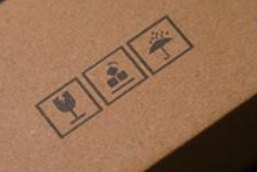
Logistics and distribution packaging depends on marks that remain readable after stacking, scanning, and transit. MARKTECH thermal inkjet and continuous inkjet printers apply barcodes, 2D codes, dates, and handling icons on cartons, cases, and related secondary packs.
Typical logistics marks
- 1D barcodes and 2D codes for warehouse and shipping identification — see barcodes and 2D codes
- Date, lot, and destination content on cases and cartons
- Handling icons and QC stamps on corrugated packs
- Variable data sent to the printer over Ethernet or serial interfaces
Recommended starting points
The H200 Series is a practical first look for high-resolution carton coding: print height of 0–25.4 mm per head, 100 m/min at 150×300 DPI, and resolution up to 600 DPI, with half-inch and one-inch heads plus multi-head stitching. For non-contact case or mixed-substrate coding at higher line speeds, evaluate a Cx500 or Cx600 continuous inkjet printer.
What to confirm before install
Scan quality depends on code size, contrast, and the condition of the board or film. Share a sample pack, the barcode or 2D format, and the required throughput. Cartridge or ink type should be matched to the substrate — water-based, mild-solvent, or UV cartridges are available on the H200 Series — and verified with test prints rather than assumed from a catalog name.
Case codes versus primary-pack codes
If the identifier must be unique from pack to pack, the job is closer to serialization than to a repeating barcode. Primary-pack date codes on bottles or films belong on the packaging and filling or food and beverage pages rather than here.
Platform notes for carton and case coding
To recap the official figures used when specifying a logistics coder: the H200 Series is the usual first look for high-resolution carton coding: print height of 0–25.4 mm per head, 100 m/min at 150×300 DPI, resolution up to 600 DPI, and half-inch or one-inch heads with multi-head stitching. Standard 45-type 42 ml cartridges are offered in water-based, mild-solvent, and UV inks, and variable data can be sent over Ethernet or RS232. For non-contact case or mixed-substrate coding at higher line speeds, a Cx500 or Cx600 continuous inkjet printer is the usual CIJ evaluation — official Cx-series line speed is up to 315 m/min for 1–5 lines.
What to send for a quote
- A sample pack or a piece of the board or film, including any existing code area
- Symbology (1D, QR, DataMatrix, or other), required size, and quiet-zone if specified
- Required throughput and whether data is static or variable
- How the pack is scanned after printing, if known, so contrast and size can be reviewed
Cartridge or ink type should be matched to the substrate and verified with test prints. Send the details through the inquiry form.
Request a quote
Need scannable carton codes?
Send a pack sample, the barcode or 2D layout, and your line speed. We can recommend an H200 or CIJ configuration.